

Hawa Hassan shows us that food is part of where we come from
The James Beard Award-winning author on her second book, "Setting a Place for Us."

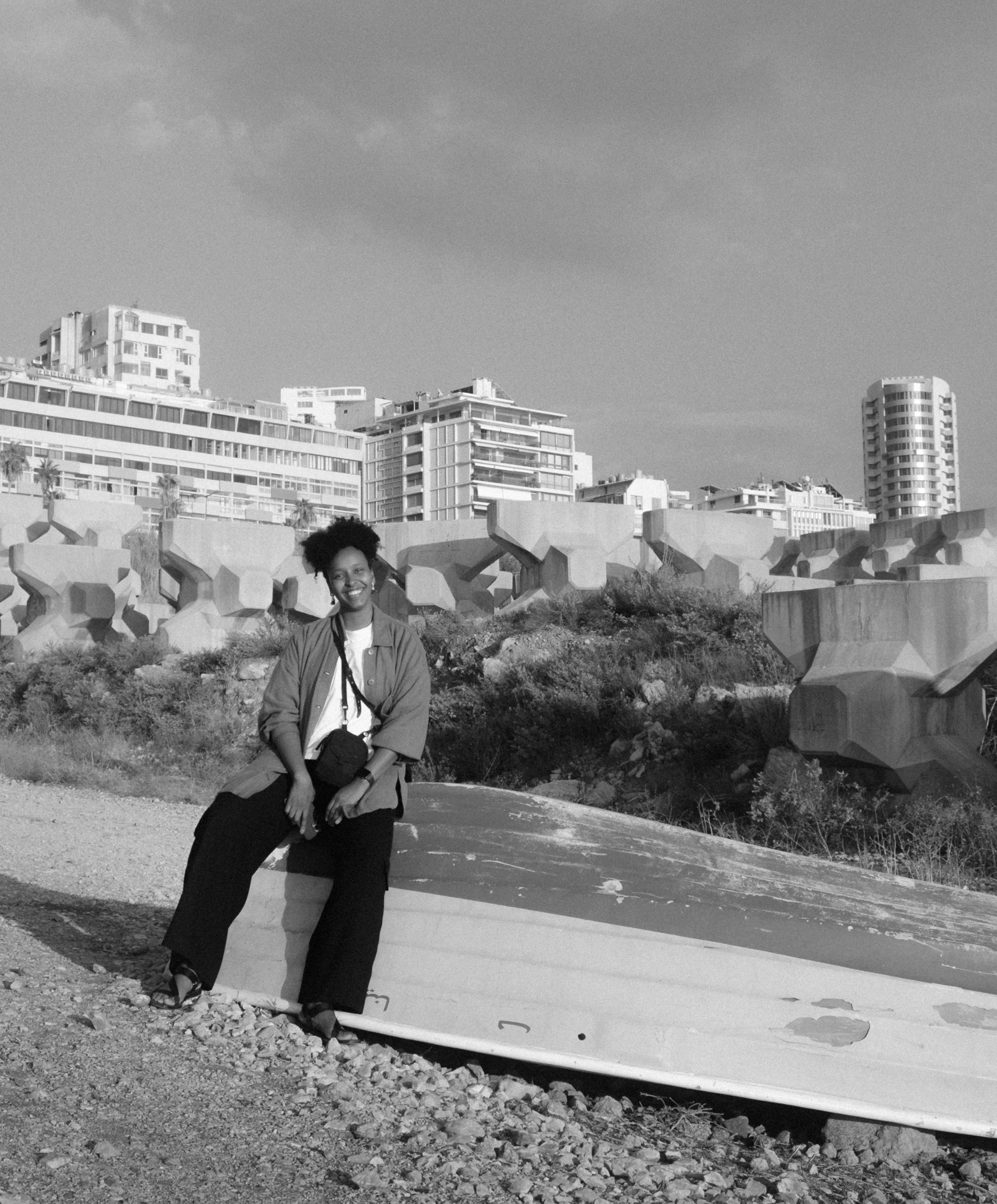
Hawa Hassan is a Somali-American author and chef who won a James Beard Award for her first cookbook, “In Bibi’s Kitchen.” Her second book, “Setting a Place for Us,” shares recipes and stories of displacement, resilience, and community from eight countries impacted by war. We chatted about her path to food, the challenges of sharing recipes that aren’t your own, and authenticity’s role in sharing stories.
Brianna Plaza: Can you tell me about your background and how you got into food media and cookbook writing?
Hawa Hassan: I was born in Somalia in the late eighties in the midst of conflict, and in the early 90s, my family and I moved to a refugee camp in Kenya. While we were there, it became obvious that we weren’t going to be going home anytime soon, so my mom signed up for sponsorship to America. It was her plus 5 children and she quickly realized that it wasn’t easy to take everyone. An opportunity arose to relocate me and 9 others to Seattle, and from 1993 to 2008, I didn’t see my family. Not only did I have to assimilate to a new place, but I was also disconnected from my own family. When I reunited with my them in 2008, I was living in New York and they were living in Norway. It quickly became obvious to me that we had lived very different lives.
This is a long way of saying this, but I got into food in a search for my own identity. I was in search of a better story of who I was and where I came from. I was really excited to not only examine my own story, but examine it against the backdrop of so many other people’s stories.
Food for me became a vehicle of advocacy because it’s a window into a world that I hadn’t been a part of for a long time. I thought there would be an opportunity to be able to take other people along the journey and it feels like that’s what I’ve been doing.
Brianna Plaza: Setting a Place for Us is your second book. How did you decide on the countries and recipes you wanted to feature?
Hawa Hassan: All of the countries in the book are chosen because of conflict and instability, refugees and migration, humanitarian concerns, and historical and cultural significance. Many of the countries in the book are told from a particular lens and I wanted to challenge us to say that there’s a different way to look at them.
We don’t have to tell everything from a single origin story and we should let people tell their own story. We are constantly being fed a narrative, and I think often times, we don’t question it enough. I’m not a historian, I’m not a politician. I’m just somebody who is wildly curious.
There are eight recipes for each country. My team and I spent hundreds of hours reading books, watching videos, and speaking to people from these communities to figure out what the top recipes were.
Brianna Plaza: How do you think about authenticity and its role in sharing these recipes?
Hawa Hassan: When we talked to the grandmothers for In Bibi’s Kitchen, it was translating recipes like, “it’s a little bit of this and a little of that.” I was physically catching their pinch of salt to measure it. We would record videos of recipes being made and then translate them for home cooks.
This time around there was so much already written about these foods. And so I think for us, the challenge was how do you mimic these flavors in everyone’s home that’s going to buy this book? There were a lot of suggestions that were made. If you don’t have cilantro, you can use dried coriander, and vice versa.
The authenticity part didn’t really come into play, but I think the challenge of it all was how do you honor these recipes that aren’t your own? How do you describe it in the way that an Egyptian person would? Those are the things that I was most worried about.
There are QR codes in the book where you scan it, it will read the recipe for you, and from somebody who speaks that language, and most likely was born and raised in that country, reading it. So those are the kind of things that I was mainly concerned about.
Brianna Plaza: Were there any challenges in sharing stories and recipes that aren’t your own?
Hawa Hassan: I think the biggest challenge is letting people tell their own stories and not inserting myself. I am just a carrier of the story and I can’t tell it for them. I think sometimes people struggle with picturing themselves in the story, but that’s not me. There are some similarities in our stories, but there’s also so much power in the differences.
Being a fly on the wall and reading and researching, but also not assuming. Being curious and asking questions. Those are the things that came in handy for me.
Brianna Plaza: How did you source the recipes and stories?
Haha Hassan: Each recipe was research and found by my team, and we did a lot of it over Zoom. Some countries I visited. I went to Beirut, and it was important for me to see what Lebanese kitchen looked like. That way I could advise my team — maybe we were told a dish was actually more Syrian than Lebanese, so then we’d find another dish that represented Lebanese cuisine better.
We tried really hard to talk to people who have the knowledge about these recipes. There’s a spinach dish in the Congo chapter and the cultural editor for the book is Congolese. She was adamant that the name we were calling the dish by an incorrect name. It took us months to understand what wild spinach might be. We yielded to the people who were raised with the experience of those recipes and cuisines.
Brianna Plaza: Did you feel that you needed to adapt some of these recipes for a Western audience?
Haha Hassan: Not in this book. This book, these recipes, and these flavors are so incredibly approachable. I think the American home cook is incredibly sophisticated and much more curious than they’re given credit for.
In this book, a lot of my work has been done for me in that I’m not teaching them about Egyptian cuisine. What I’m trying to do is tell them a new story about what it means to be Egyptian and what the country is like and what their food is like. There’s nothing that we recreated to be more palatable.
Great Article!